
From Surrey farm labourer’s son to Manchester police constable
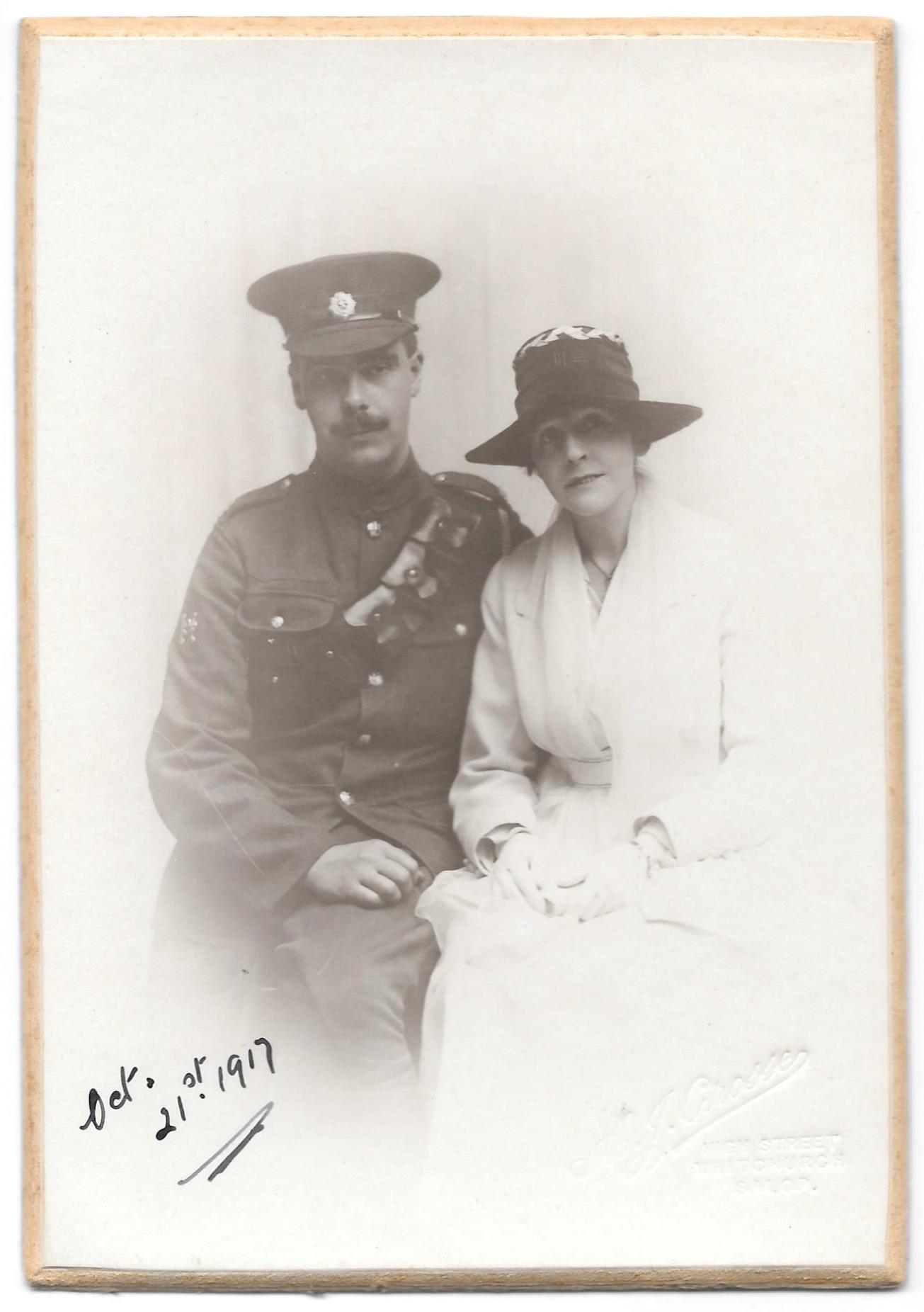
This archive originated in April 2026 with the acquisition of a marriage photograph relating to Charles Grout. Subsequent research has enabled the reconstruction of his life through parish registers, census returns and military service records.
Early Life in Rural Surrey
Charles Grout was born on 11 April 1890 in the Chertsey registration district of Surrey and baptised on 13 July 1890 at the parish church of Walton-on-Thames. He was the son of Arthur Grout, a farm labourer, and Sophia (née Abrahams).

By the 1891 Census, Charles appears as an infant living with his parents in Walton-on-Thames. His father remained employed in agricultural labour, and the household was part of a wider pattern of rural families dependent on seasonal and manual work.
During the following decade, the family moved within Surrey, and by the 1901 Census they were living in Wisley, another rural parish. Charles grew up alongside several siblings, including Abra, Sarah, and William. These early years were shaped by modest means but stable family structure.
A Skilled Trade: Harness Maker
By 1911, at age 21, Charles had moved beyond agricultural labour into a skilled occupation. The census records him as a harness maker, still residing in Wisley with his family.
This transition represents a significant step upward in status and skill. Harness making was a respected trade requiring training and precision, closely tied to the continued importance of horse transport in Edwardian Britain.
Additional evidence shows that he spent approximately ten years employed by H. Allen & Co., saddlers of 83 Vauxhall Bridge Road, London, indicating that he likely began this work as a teenager. His employer later described him as a “competent, honest and sober workman,” a strong endorsement of both his skill and character.
By 1915, he was living independently in London at 45 Bonnington Square, Vauxhall, firmly established in his trade.
War Service in the Army Service Corps
With the First World War underway, Charles enlisted in the British Army:
- Enlistment date: 16 November 1915
- Unit: Army Service Corps (A.S.C.)
- Service number: T/9464
At enlistment, he was described as physically fit, standing 5 feet 10½ inches tall, with only a minor medical note of a slight hernia.
World War One Service Records PDF file opens in a new tab
His trade as a harness maker made him particularly suitable for the A.S.C., which was responsible for transport and logistics. He served as a Driver, a role that involved managing horse-drawn transport, supply wagons, and associated equipment.
He joined at Woolwich and later served with 237 Company, A.S.C. His service reflects the essential but often overlooked logistical backbone of the British war effort.
Marriage During Wartime (1917)
On 21 October 1917, while still serving in the army, Charles married:
- Margaret Elizabeth Dickson (1893–1918)
- At Holy Trinity Church, Vauxhall Bridge Road, Westminster
The marriage register provides detailed information:
- Charles was 27, a Driver in the A.S.C., stationed at Prees Heath Camp, Shropshire
- His father, Arthur Grout, was now described as a carter, indicating a shift from farm labour to transport work
- Margaret was a clerk, living at 42 Ponsonby Place
- Her father, David Dickson, had been a police constable but was deceased
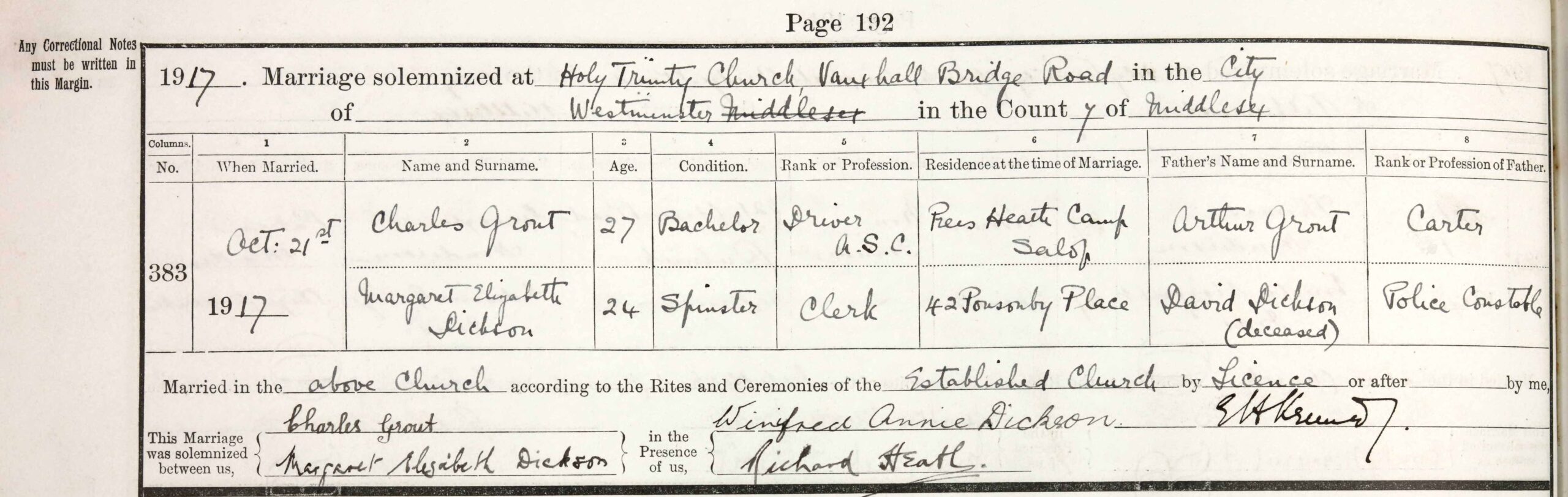
The witnesses were Winifred Annie Dickson and Richard Heath, likely relatives or close associates.
This marriage, like many during wartime, took place under the uncertainty of military service and separation.
A Son Born—and Immediate Loss (1918)
Less than a year after their marriage, Charles and Margaret welcomed a son:
- Charles Dickson Grout
- Born 24 September 1918, at Byfleet, Surrey
However, tragedy struck almost immediately.
Margaret died on 28 September 1918, just four days after giving birth, from complications recorded as:
- Toxaemia of pregnancy
- Puerperal convulsions
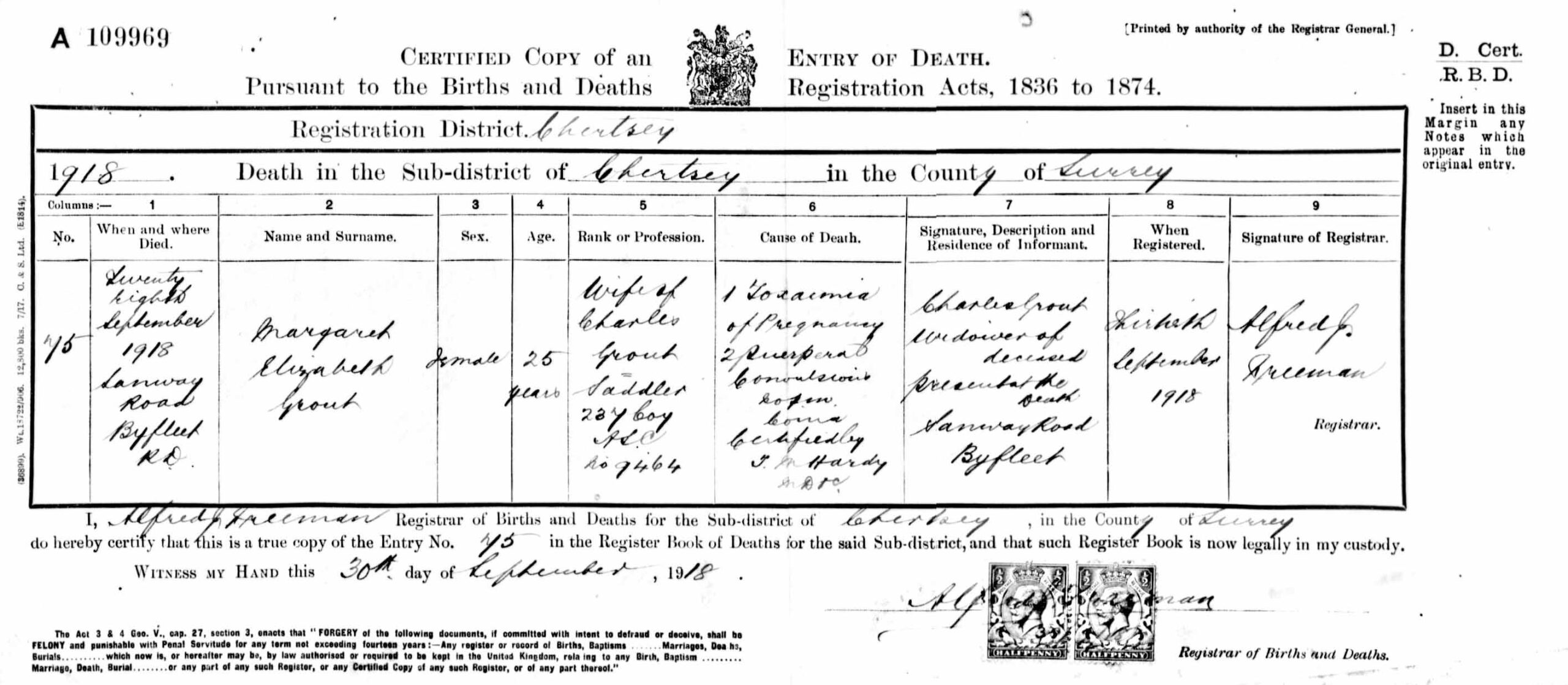
Charles himself registered her death. At age 28, he was left a widower with a newborn child.
This event marks a profound turning point in his life, reflecting the harsh realities of childbirth in the early twentieth century.
Demobilisation and a New Beginning (1919–1920)
Following the end of the war:
- Charles was demobilised on 3 April 1919 at Prees Heath Camp
- He returned to civilian life and was placed in the Class Z Reserve
Within a year, he remarried:
- Wife: Elsie Norcross Parkinson (1895–1963)
- Marriage registered: April 1920, Chorlton (Lancashire)
This marriage marks a decisive geographic and social shift—from Surrey and London to Manchester.
A Blended Family
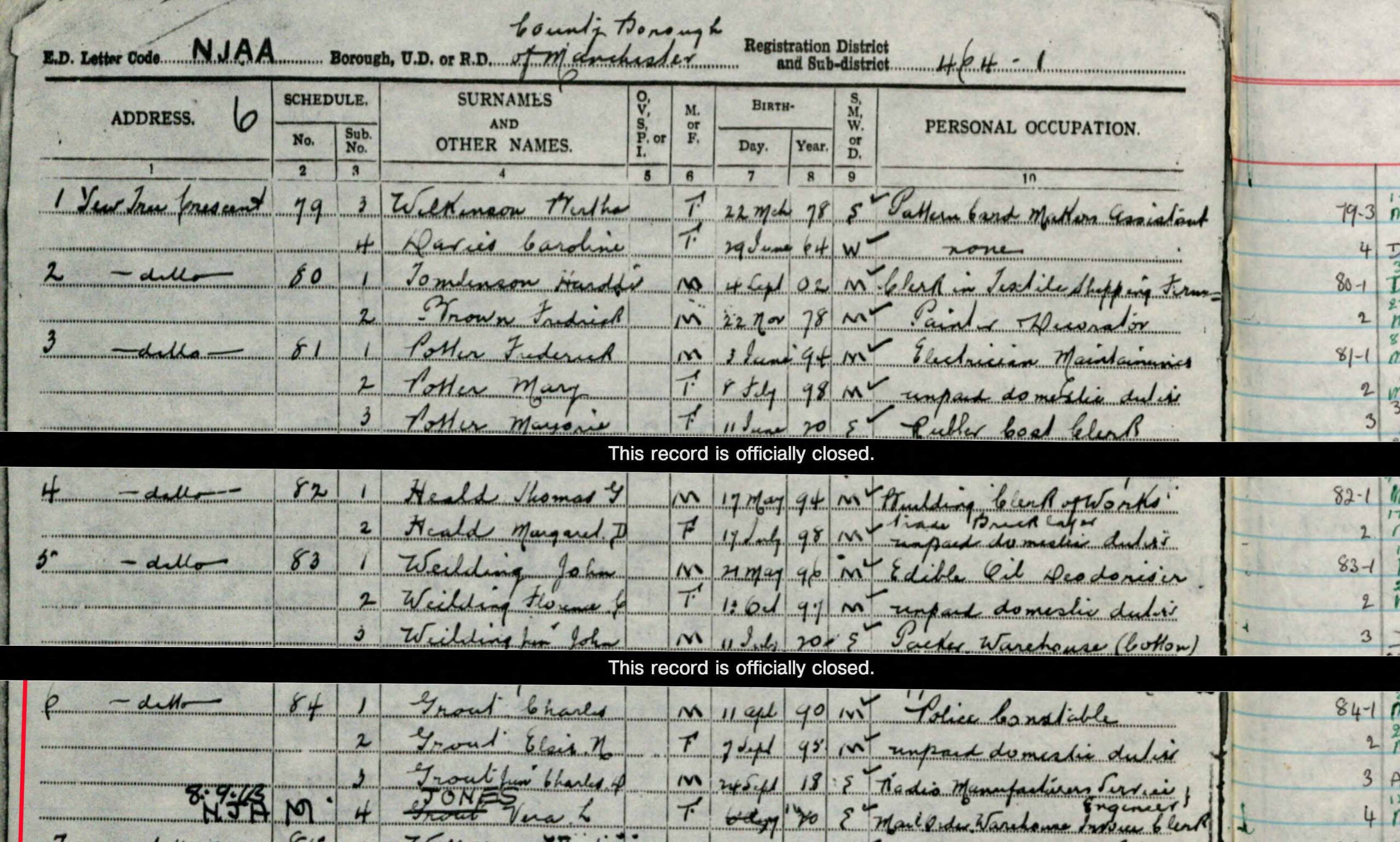
By the 1921 Census, Charles was living in South Manchester:
- Charles Grout (31) – Head of household
- Occupation: Police Constable
- Employer: Manchester Corporation (Watch Committee)
- Elsie Grout (28) – Wife
- Vera Lilian (age 10) – Daughter
The census clearly shows that Vera was born around 1910 in Manchester, before Charles’s marriage to Elsie.
This establishes that:
- Vera was Elsie’s daughter from a previous relationship
- Charles became her stepfather
This blended family structure reflects a common but often overlooked aspect of early twentieth-century family life.
Career in the Police
By 1921, Charles had established a new and stable career as a police constable in Manchester.
The transition from:
- harness maker → soldier → police officer
represents a significant trajectory of social mobility and adaptation.
The 1939 Register confirms that he remained in this occupation nearly two decades later, still living in Lancashire and still married to Elsie. This suggests a long and steady career in public service.
Later Life and Death
Charles lived out the remainder of his life in the Manchester area.
He died on 2 March 1954 in Fallowfield, Manchester, aged 63. His death is recorded in the civil registration index and aligns precisely with his known birth year.
He was buried in Manchester, where he had spent over thirty years of his life.
Conclusion
The life of Charles Grout is one of quiet resilience and transformation.
Born into a rural labouring family in Surrey, he:
- learned a skilled trade
- served in the First World War
- endured the loss of his first wife within days of childbirth
- rebuilt his life in a new city
- and established a long career in the police force
His story reflects broader themes of early twentieth-century Britain:
- the decline of rural labour
- the importance of skilled trades
- the impact of war on family life
- and the opportunities for reinvention in growing industrial cities
Above all, it is a story of endurance—of a man who adapted to profound personal loss and changing circumstances, and who forged a stable life in their aftermath.
Sources (Summary)
This narrative is based on:
- Parish baptism registers (Walton-on-Thames, 1890)
- Census returns (1891, 1901, 1911, 1921)
- 1939 Register
- WWI service records (Army Service Corps)
- Marriage register (Westminster, 1917)
- GRO marriage index (1917, 1920)
- Birth and death registrations (1918, 1954)